

Here are my top 10 favorite ways to add health to your picture and prevent future dis-ease.
2. Move your body! Do 30-60 minutes of low impact movement EVERYDAY. Tai Chi, yoga, walking, and rebounding (mini trampoline) are all great ways to get your circulation to move nutrients in and toxins out. If your are doing aerobic exercise be sure to wear a heart monitor and stay below 80% of your max heart rate.
3. Drink plenty of filtered water for your kidneys. You have heard me say it before and I say it again, drink water! One half of your body weight in ounces is a great place to start.
4. Take 100 deep conscious breaths a day for your lungs. When was the last time you filled your lungs? In addition to being an excellent way to eliminate toxins, deep breathing also massages your heart, calms your nervous system, and increases your energy.

7. Take probiotics or eat a homemade, cultured food EVERYDAY. Wait a second. Didn't I say not to take things? The truth is all healthy cultures traditionally ate cultured or fermented food providing their digestion with beneficial GI flora and protecting it from disease. This just isn't the case in our day and age. Yogurt is okay, as long as you are sure you are not sensitive to dairy (lactose and/or casein), and you make it yourself to ensure live cultures.
9. Dry skin brushing and caster oil packs (COP) to move your lymph. Your have twice as much lymph fluid in your body as blood and the lymph doesn't have a pump to move it around the body. Lymph continuously bathes each cell and drains away toxic metabolytes in a circulatory system powered only by your breathing and movement. Things like COP, dry skin brushing, deep breathing, lymphatic massage and regular exercise help rid your body of toxins and bath your cells in vital nutrients. 10. PLAY! Do something fun EVERYDAY preferably with people you like. Yes, you can say a doctor (or, at least a med student) told you to.
Life is ultimately about BALANCE not perfection. I do most of these most days. Everyday I am able to do them all I thank myself for adding another day of health into my life. Try it and see how good you can feel.
Sarah Marshall is a candidate to graduate as a Naturopathic Doctor in June 2009. She is currently practicing as a medical intern at the Natural Health Center Portland, OR. If you would like to schedule and appointment for a personalized health consultation with her call (503) 552-1551.
Top 10 Things to DO for Your Health


I Treat People, Not Their Symptoms
You say you don’t treat the symptoms, what does that mean?
Looking at the symptoms your body expresses is like looking at an iceberg. If you only focus your attention, and treatments, on what you can see, you are missing most of the picture. About a month ago a friend of mine asked me if I had any “miracle cures” for a rash she had recently broken out in. She told me she had had the rash off and on for 35 years mostly during times of stress, which she was currently in.
I explained to her that I don’t treat symptoms, her rash, directly. I treat people who have symptoms. Why you have eczema is not for the same reason as why anyone else dose. I target the why, not the symptom, when I form my treatment plan.
I also explained to her a common misconception in medicine is that there are miracle cures or quick fixes. Although it seems like you just got the rash you have really had it for 35+ years and it may take a longer time to heal than you may expect.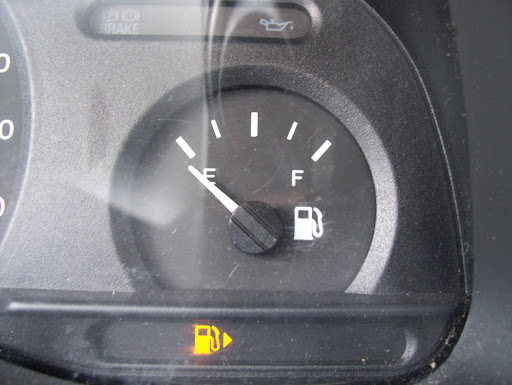 The analogy I like to use is an oldie but a goody. Lets say your car has a symptom. You are driving and you notice a rash, in the shape of a gas pump, has broken out on the dash, and it's glowing! You go to the car doctor and describe this glowing, light problem to her and tell her you want it to go away. The doctor has two choices; she can treat only the symptom and prescribe electrical tape to cover the light, or she can address the cause of the light developing in the first place, and fill the gas tank. The tape may seem like a miracle cure taking only moments to make the light “go away” but there are obvious long term problems with that option. By taking the time to properly treat the cause the car is inherently better off after the treatment; in the other case, even with the light “gone” the car, and driver, are headed for disaster.
How would you treat the cause of the eczema?
Any treatment to "make it go away" would be suppressive and not curative. My best recommendation is to address the cause, the stress.
I would support the body's stress response, make it more efficient and thus decrease the need for it to respond with a symptom, like a skin rash. Here is an example treatment plan:

- Help the body cope with stress: B complex, Co Enzyme Q10 and relaxation (obvious, I know, but it actually works!)
- Specifically for the skin: Zinc, Vit E, Vit A, and fish oil
- Avoid inflammatory foods like sugar, alcohol, red meat, and simple carbohydrates (anything made with flour) to decrease the body’s systemic level of inflammation and allow the immune system to focus more energy on the rash.
- Drink plenty of water (1/2 your weight in oz per day minimum, more if you exercise)

All of these treatments will help relieve the symptoms of the rash and help the person be healthier overall. The same treatment plan could then be used preventively in times of stress, before the outbreak occurs, and possibly avoid the rash all together.
All recommendations suggested here are purely for your own information and education. The information is not a substitute for professional medical advice, diagnosis or treatment. Sarah Marshall is a candidate to graduate as a Naturopathic Doctor in June 2009. She is currently practicing as a medical intern at the Natural Health Center Portland, OR. If you would like to schedule and appointment for a personalized health consultation with her call (503) 552-1551.
The Story of Food Part III: The Simple Truth
 There is a lot to know out there about "eating right". In learning about nutrition you will find contradictions, inapplicable facts, and a lot of confusion. I have been working to figure out how to build up your knowledge about nutrition without overwhelming you.
So let's simplify things.
"Eat food. Not too much. Mostly plants." - Micheal Pollan
The only rule is - there are no laws in eating: there are guidelines. I can't stress enough that this is intended to improve your life, not restrict you so much you can't breathe. Trying to eat "right" can be a very consuming activity and it should take some time and effort, however, it should equally be enjoyable and fun.
Most of what is on our shelves are food substitutes trying to convince us they are food. To expand on "eat food" are the following guidelines. Don't eat anything that:
 has more than 5 ingredients

- contains ingredients you don't recognize
- contains ingredients you can't pronounce
- contains high fructose corn syrup
- your Great Grandmother wouldn't recognize as food
What counts as food? The best definition for food is what we commonly think of as "whole foods". Whole foods are foods that are in the same form in the grocery store as they are in nature. We could substitute the word wild for whole. Whole grains can be confusing because the term is applied to highly processed foods that contain "whole grains". If you look at the ingredients list on most of these "whole foods" they fail the 5 ingredient and pronounce-ability tests and thus are unqualified as "food". Finding these foods in grocery stores is easy. Stick to the outer edges of the grocery story and avoid the inner isles. Careful though - these days not all items on the outer edges are whole foods.

If we do begin to restrict our caloric intake it is all that much more important the foods we do eat have the most nutrient bang for their buck. Guess what foods those are? You got it, whole foods!
 About one thousand years ago humans made a dramatic shift in the source of their calories from mostly leaves to mostly seeds. One thousand years may seem like a long time but in the context of our evolutionary history its is actually pretty short. If we condensed human evolution into one year we began to eat a diet heavy in grains (seeds) about 2 days ago or 43 hours. The reasons for this change are more complex than I want to get into or that you want to read about here. (If you do have an interest, read "Guns, Germs, and Steel: The Fates of Human Societies" by Jared Diamond). The relevancy to us here is - was it the best change for our health?
Grains have a relatively high glycemic load (amount of glucose released into our blood per gram of food eaten) and although marketed as a high fiber food the actual best sources of fiber are fruits and vegetables that grow above ground (i.e. not potatoes). Sixty-five percent of our daily caloric intake should be made up of plants and the majority of that should be fruits and vegetables. Grains aren't bad for you, per se, but we have to return to the whole food recommendation and ask ourselves if we have ever seen a bagel tree in nature.
In the simplest summary I repeat, "Eat Food. Not too Much. Mostly Plants" - MP.
 References: Anyone who has read Micheal Pollan's book "In Defence of Food" will find this information very familiar and I want to credit him for the phrases, "Eat Food. Not too Much. Mostly Plants" and "More Leaves than Seeds". However the information provided here, and in his book, are the standard recommendations of the majority of Naturopaths.
All recommendations suggested here are purely for your own information and education. The information is not a substitute for professional medical advice, diagnosis or treatment. Sarah Marshall is a candidate to graduate as a Naturopathic Doctor in June 2009. She is currently practicing as a medical intern at the Natural Health Center Portland, OR. If you would like to schedule and appointment for a personalized health consultation with her call (503) 552-1551.
Back at last

Hello my loyal readers.
I greatly apologize for my absence and I am back! Truth be told my last post was just before finals, which I followed with the most necessary and inspiring 10 days in Mexico. Upon returning and a rough reentry into medical school I take my Primary entrance exam tomorrow, the last step before I enter the clinic as a fully functioning intern. And so I write tonight, at 11:00 pm, about taking time for the self: an integral aspect of health and healing.
All recommendations suggested here are purely for your own information and education. The information is not a substitute for professional medical advice, diagnosis or treatment. Sarah Marshall is a candidate to graduate as a Naturopathic Doctor in June 2009. She is currently practicing as a medical intern at the Natural Health Center Portland, OR. If you would like to schedule and appointment for a personalized health consultation with her call (503) 552-1551.
Taking Time for the Self

"But I don't have time!"
Gone are the days when we can run ourselves into the ground doing for others. Because of work, family, or friends we as a society are running on "E". I am not asking, I am telling all of you that's all in the past. Starting now we all must invest in ourselves if we wish to invest in our future.
It is evident that as a nation we are getting sicker by the hour. I often sit and think about how a country that has more technology, more industry, who frankly has a culture based on more, more, more, can have ever rising rates of chronic illness and disability. This is a complex issue and I do not pretend to have the solution. But I have a solution; when I take an hour, or even 10 minutes and turn off my phone, put down the to do list, stop moving 100 miles an hour and just breathe, something miraculous happens.
I had the great privilege to spend 10 long days in that state, last month, on a retreat in Isla Mujeres, Mexico. Slowing down that completely brought me frighteningly in touch with myself. No longer distracted by classes, exams, patients, my husband, money, grocery shopping, or even cooking I found a deafening silence left in the wake of the chaos I called daily life. And, I was scared. What would I find in that silence? Would there be anything there at all?
First, I slept. A lot. It was clear I had been burning the candle at both ends for too long and I needed to rest and repair. I was at a formal retreat, and as such, had some schedule to adhere. The intention of the retreat (aptly named "Portals to the Self") was about tuning inward into the deep, possibly dark, place inside where only You are left. There I was able to do all the repair I needed. By the third day, I finally felt I was fully present. The inertia of my previous pace of life had finally left my body. Finally, I was standing still, in the present moment.
What I found in that moment was a person I had not spoken with in a long time. She was funny, and interesting, and had dreams and goals I had forgotten. She loved to dance, and swim, and write, and laugh. When I finally slowed down, when the world around me stopped moving, when I turned off the technology and listened, I met myself, again.

I know a few of you are reading this and asking what has this got to do with medicine.
If you are sick, if you are exhausted, if you are fighting a disease, you are fighting with your self. It is only by going within, slowing down and listening that we may experince the true nature of healing. The yogis know this. The Chinese know this. Our ancestors know this. It is time we remember.
This is the meaning of Vis Medicatrix Naturea, the healing power of nature, our first tenet of Naturopathic Medicine. Find that still and quite place inside of you and you have found your own power to heal.
I want you to close your eyes and imagine a world without chronic illness, a world without diabetes, heart disease, or cancer. Look around you at all the people full of energy, life, and vitality. Imagine what we could do. Imagine the community, the sharing, the peace our world could have.
It starts with you.
Begin the healing today.
The Story of Food: Part 2: If Not Organic Then What?
 Okay so I debunked some of our more idyllic thoughts about organic farming, at least at the level of the national chains. If organic boxed salad from the grocery store isn’t all it's cracked up to be then what do we eat?
This answer is remarkably simple with a complex twist. Put simply, eat local. The complexity is that eating local requires more from you than a drive to your local grocery store. The old adage couldn’t be more true - we are exactly what we eat. Instead of letting the grocery store determine which farmers raise your food, and what foods you will eat, it is time to take back control of what goes into your mouth and, in turn, what makes up your body.
You should eat what you feel good about, grown by people who raised the food in such a way that makes you feel good. This is personal and there isn’t an easy answer. It will require a little research on your part. You may even find you are willing to have different levels of quality for different foods. You may care less about how your tomato was raised than your steak. These are choices you need to explore and make yourself.
To aid you in that process I encourage each and every one of you to read two books by Michael Pollen. The order you choose to read them in depends on if you want the answer before the background or vice versa. The answer book is In Defense of Food. The background book is Omnivores Dilemma (both books are highlighted on my recommended reading list). If books are not your thing check out the following websites:
- http://www.eatwild.com/
- http://www.michaelpollan.com/ (especially his links page)
- http://www.eatlocal.net/
- web.missouri.edu/ikerdj/papers/Alabama-Eat%20Local.htm (a great paper Eat Local: A Matter of Integrity and The Top Ten Reasons to Eat Local by John Ikerd).
 The ultimate eating manifesto: Local Organic! And it’s out there. This is a map of the farmers markets, co-ops, restaurants, stores and farms that support local organic foods registered with localharvest.org. If you don’t know where to find local organic foods in your area visit http://www.localharvest.org/ for a farmer’s market near you for fun, community, and great healthy food.
All recommendations suggested here are purely for your own information and education. The information is not a substitute for professional medical advice, diagnosis or treatment. Sarah Marshall is a candidate to graduate as a Naturopathic Doctor in June 2009. She is currently practicing as a medical intern at the Natural Health Center Portland, OR. If you would like to schedule and appointment for a personalized health consultation with her call (503) 552-1551.
The Need For Change: Part 1

